
Structured Cabling
Cat6 and commercial data cabling for offices, warehouses, remodels, expansions, and new installations.
- Horizontal cabling & drops
- Patch panels & faceplates
- Testing, labeling & certification
- Adds, moves & changes
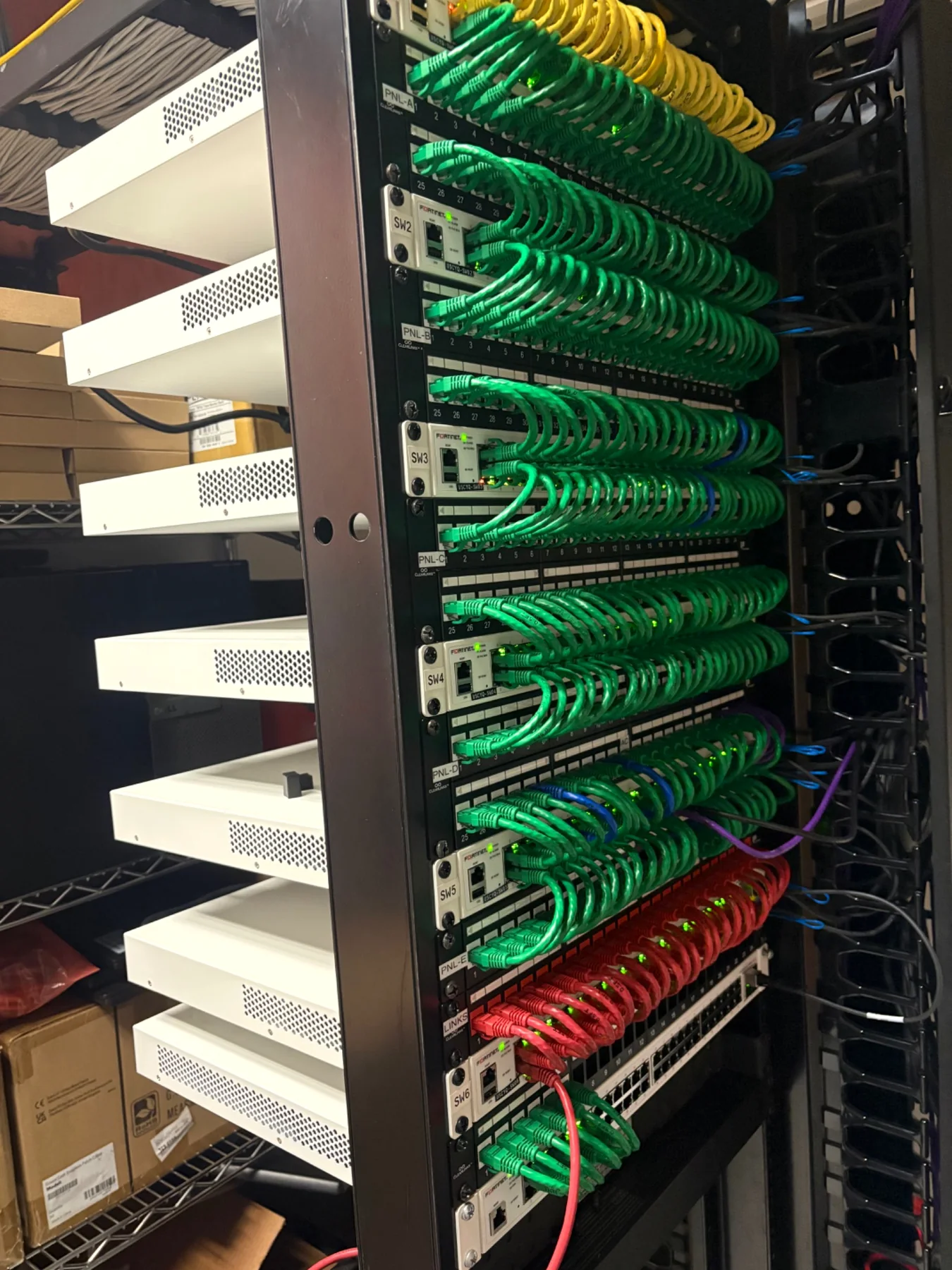
CableLAN designs, installs, reorganizes, removes, tests, and documents the physical infrastructure behind reliable business networks—from structured cabling and fiber to network rooms, wireless, cameras, and access systems.
From the cable pathway to the rack, patch panel, fiber backbone, access point, camera location, conference room, or tenant cleanout, CableLAN focuses on clean, supportable work built for commercial environments.
Cat6 and commercial data cabling for offices, warehouses, remodels, expansions, and new installations.
Fiber backbone infrastructure for MDF/IDF links, long-distance connectivity, equipment moves, and upgrades.
Organized network rooms with racks, cabinets, pathways, cable management, patching, and equipment relocation.
Commercial display mounting and conference room setup for offices, meeting rooms, training spaces, and collaboration areas.
Low-voltage infrastructure for IP cameras, NVRs, access control, gates, and intercom systems.
Removal of abandoned cabling and network equipment for remodels, tenant turnover, relocations, and new occupants.


CableLAN builds new network rooms and reorganizes existing ones with an emphasis on cable management, labeling, equipment access, and future serviceability.
Commercial spaces often inherit years of abandoned cable, unused network equipment, outdated racks, and unidentified connections. CableLAN can remove and organize the low-voltage infrastructure so contractors, property managers, and new tenants can start with a cleaner space.


CableLAN's project history includes organizations across manufacturing, hospitality, entertainment, education, financial services, government, and technology.
Names shown represent historical project experience. No endorsement or current client relationship is implied.
Our goal is not simply to get cable from point A to point B. The finished system should be organized, identifiable, accessible, and ready for the people who maintain it.
Review pathways, network rooms, device locations, construction conditions, wireless needs, and project goals.
Define routes, cable quantities, rack requirements, equipment locations, labeling, removal work, and installation scope.
Perform the work with an emphasis on craftsmanship, cable support, organization, and serviceability.
Test, label, verify, and document the finished infrastructure for the customer or IT team.
Bring CableLAN in early so pathways, racks, AP locations, fiber, cameras, removals, and equipment space can be planned before they become expensive changes.


